Skip to content
Lace pricing confuses many buyers. You see prices from $2 to over $100 per yard and wonder what makes the difference.
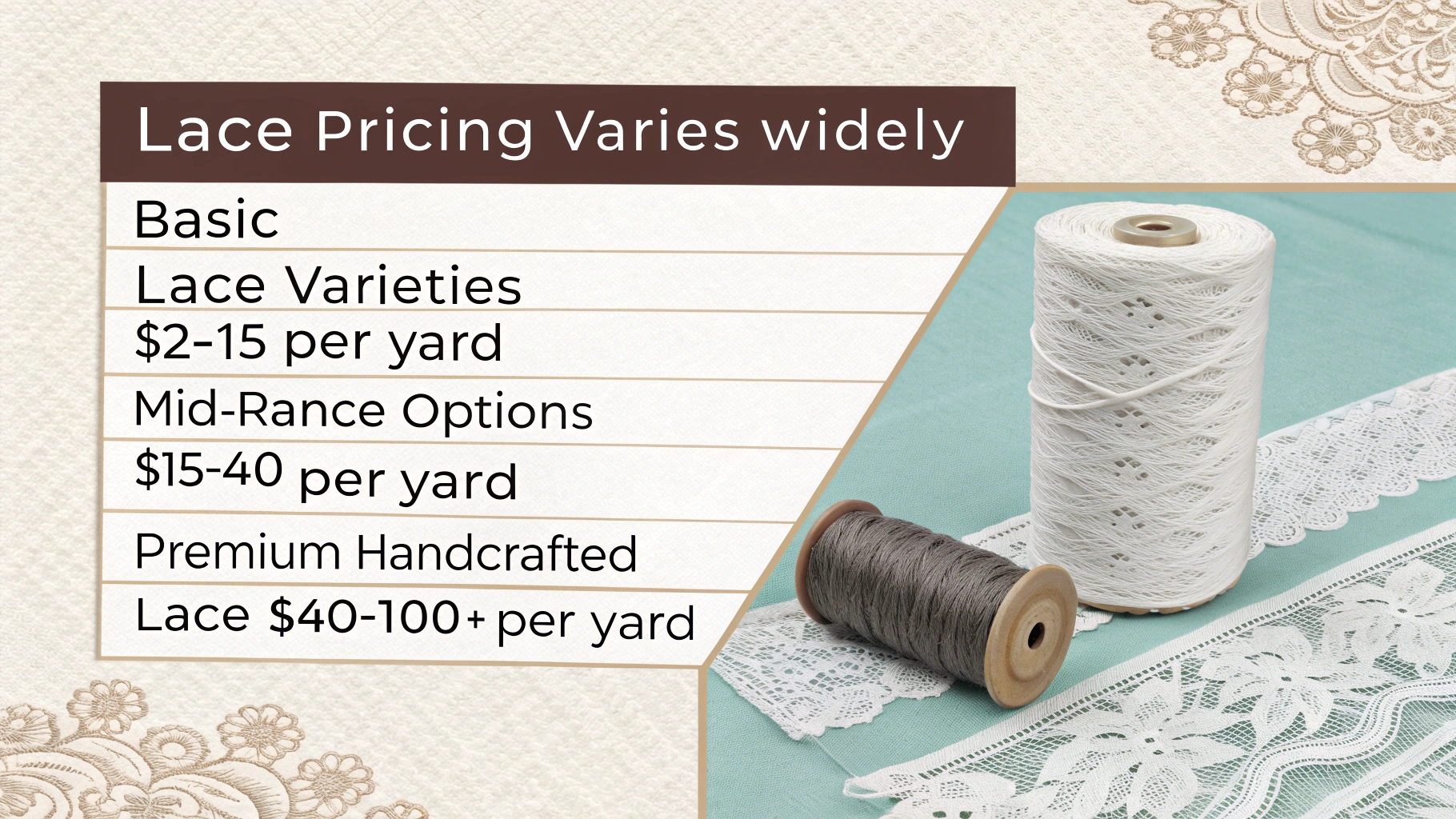
Lace fabric costs range from $2-15 per yard for basic varieties, $15-40 for mid-range options, and $40-100+ for premium handcrafted lace. Price depends on material quality, construction method, design complexity, and whether you buy wholesale or retail.
After working in lace manufacturing for over two decades, I’ve seen how these price differences reflect real quality variations. Let me share what drives these costs and help you make informed purchasing decisions.
What Factors Determine Lace Fabric Pricing Per Yard?
Price confusion happens when buyers don’t understand the key factors. Each element significantly impacts your final cost.
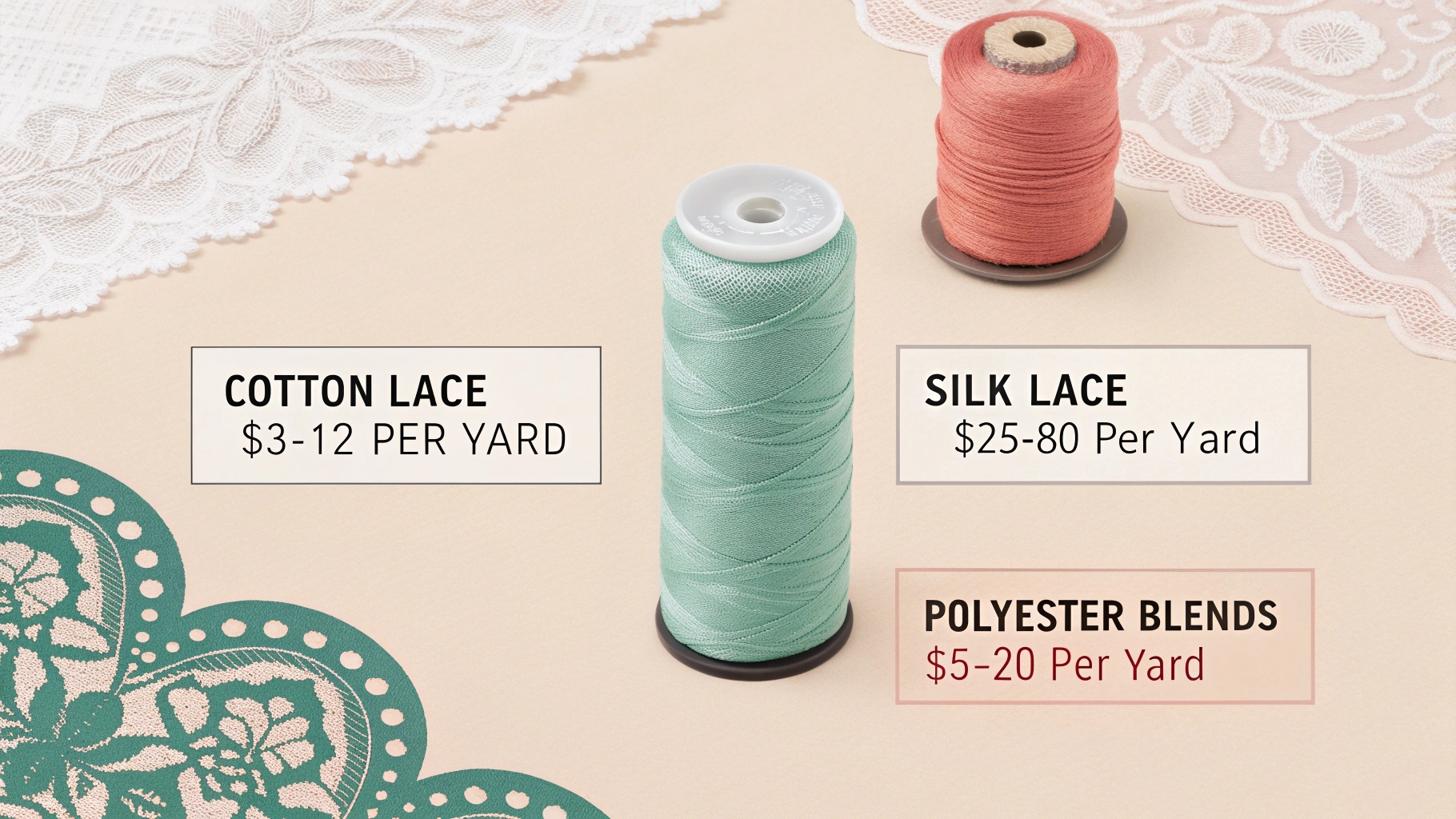
Material choice creates the biggest price gap in wholesale lace fabric. Cotton lace typically costs $3-12 per yard at wholesale, while silk versions of identical patterns run $25-80 per yard. Polyester blends offer middle ground at $5-20 per yard.
The construction method makes an equally dramatic difference. At our manufacturing facilities, machine-made lace costs 60-70% less than handcrafted varieties. Our computerized embroidery machines can produce intricate patterns at a fraction of hand-embroidery costs.
Material Quality Impact on Pricing
I’ve worked with every lace material imaginable. Pure silk creates the most luxurious feel but commands premium prices. Cotton provides durability and affordability. Polyester offers consistent quality and easy care.
Our luxury bridal collection features silk-blend laces starting at $35 per yard wholesale, while comparable cotton versions begin at $8 per yard. The silk creates better drape and luminosity, justifying the higher cost for high-end applications.
Synthetic materials have improved dramatically. Modern polyester laces rival natural fibers for appearance while offering superior wash-ability and color-fastness. These factors make them popular for lingerie lace supplier applications.
Construction Methods and Labor Costs
Machine production allows us to maintain consistent quality while controlling costs. Our facilities in China and Turkey utilize state-of-the-art equipment that produces complex patterns efficiently.
Hand-beaded applications still require skilled artisans. Our beaded lace collection involves hand-placement of beads and sequins, increasing labor costs but creating stunning visual effects impossible to achieve mechanically.
Computer-controlled embroidery creates precise, repeatable patterns. This technology enables us to offer custom color development services while maintaining competitive wholesale pricing.
How Do Wholesale Lace Prices Compare to Retail Pricing?
Retail markups shock many first-time wholesale buyers. Understanding these differences helps you evaluate supplier pricing.
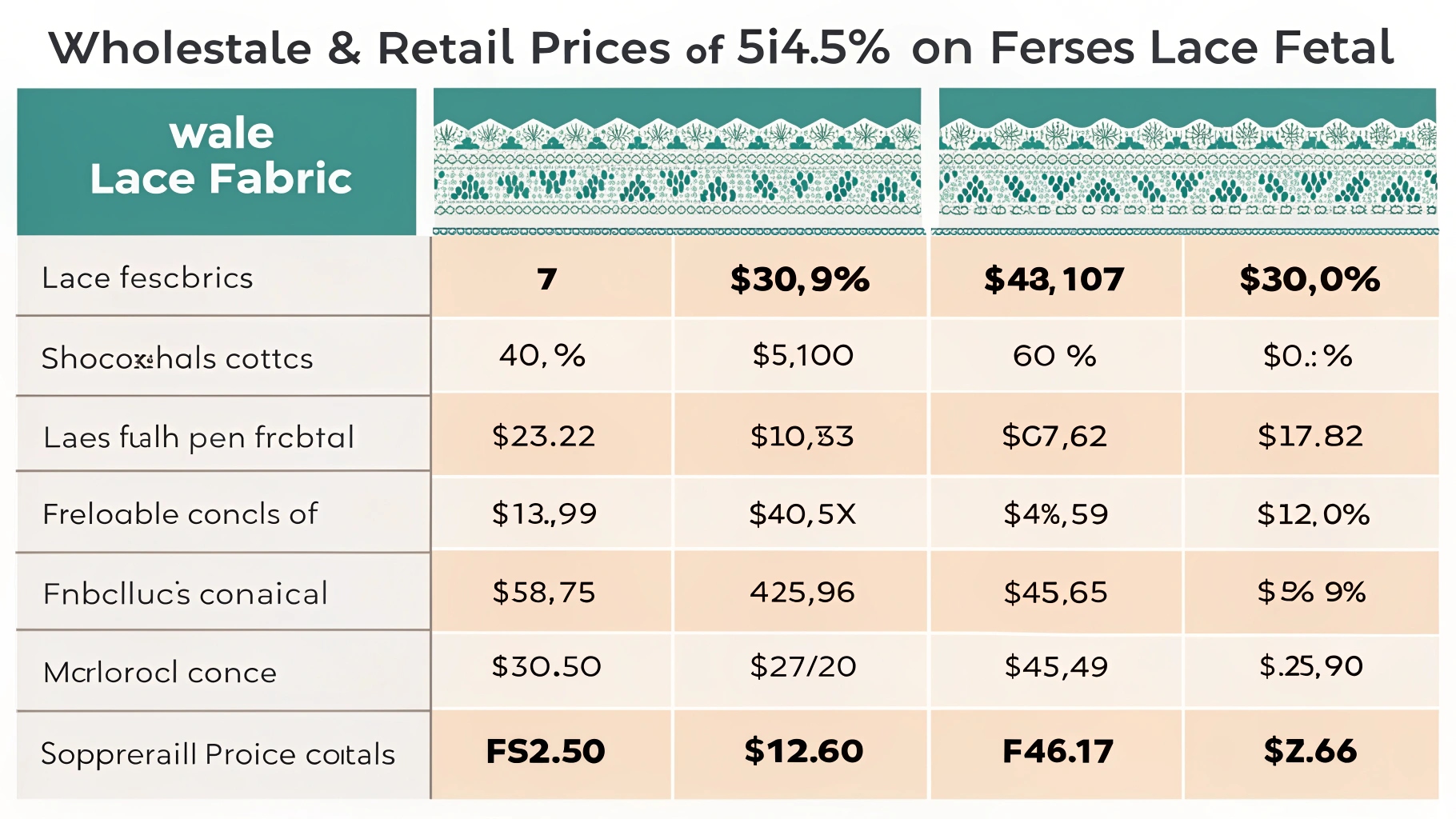
Wholesale lace fabric typically costs 40-70% less than retail prices. A lace selling for $20 per yard retail might cost $6-12 wholesale, depending on volume and relationship with the lace fabric manufacturer.
Working directly with manufacturers like us eliminates distributor markups. Retail shops need 100-300% markups to cover overhead, while textile wholesaler lace operations work on smaller margins due to volume sales.
Volume Pricing Benefits
Bulk lace fabric purchases create significant savings. Our pricing tiers reflect production efficiencies gained through larger orders.
Orders under 50 yards receive standard wholesale pricing. Orders over 200 yards qualify for volume discounts of 10-15%1. Orders exceeding 1000 yards can achieve 20-25% additional savings.
These volume benefits make sense for fashion manufacturers planning seasonal collections. Buying coordinating laces together reduces per-yard costs across your entire line.
Our design process allows customization within volume orders, giving you unique patterns without custom pricing penalties. This approach helps boutique manufacturers access exclusive designs affordably.
Direct Manufacturer Advantages
Buying from lace fabric suppliers versus manufacturers creates price differences. Each level adds markup while reducing your control over specifications.
We offer direct pricing2 because we control the entire production process. Our products reflect this vertical integration, providing better value than multi-step distribution chains.
Quality control improves when you work directly with manufacturers. We can adjust specifications, modify colors, or adapt patterns based on your specific needs without third-party communication delays.
What Should Fashion Manufacturers Expect to Pay for Quality Lace?
Professional buyers need realistic price expectations. Quality lace requires investment, but smart purchasing strategies maximize value.
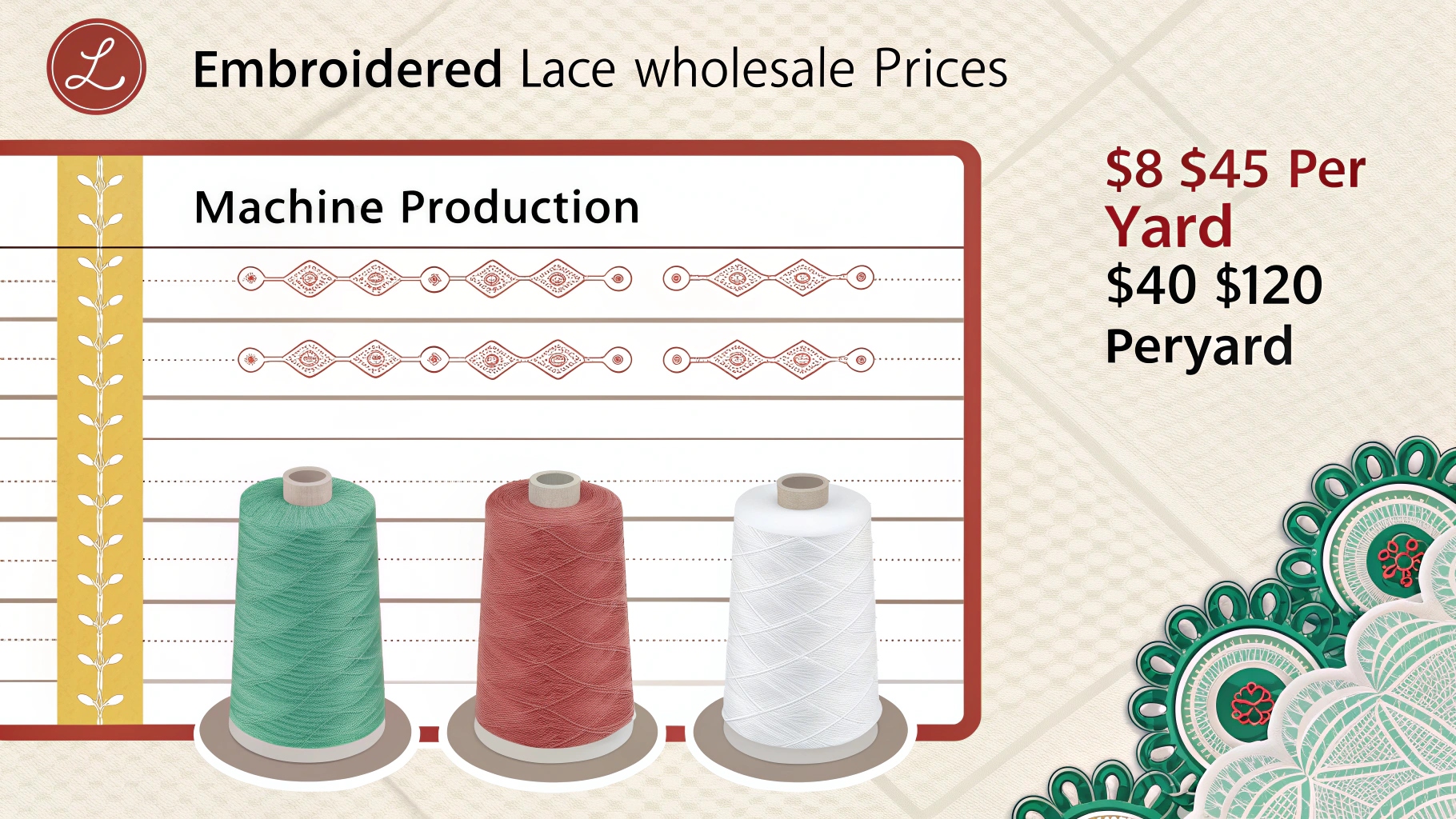
Embroidered lace wholesale prices range from $8-45 per yard for machine production, while hand-embroidered varieties cost $40-120 per yard. Most fashion applications work well with machine-embroidered options offering 90% of the visual impact at 30% of the cost.
I recommend budgeting 15-25% of your fabric costs for lace elements. This allocation allows quality lace selection without overwhelming your materials budget.
Application-Specific Pricing Guidelines
Different applications justify different price points. Understanding these helps optimize your purchasing decisions.
Wedding dress lace supplier relationships require premium materials starting at $25-40 per yard wholesale. Bridal customers expect luxury feel and appearance, making this investment necessary for market positioning.
Lingerie applications work well with stretch lace trim supplier options costing $12-28 per yard. These laces prioritize comfort and fit over visual complexity, allowing cost savings without compromising function.
Our 3D floral embellishment collection serves haute couture applications where visual impact justifies $45-85 per yard pricing. These pieces create focal points that can elevate entire garments.
Seasonal and Trend Considerations
Fashion cycles affect lace pricing. Planning ahead provides cost advantages while ensuring current styling.
New trend adoption creates temporary price premiums. Early adopters pay 20-30% more for cutting-edge designs, while mainstream adoption brings prices down within 6-12 months.
Our rhinestone applications demonstrate this pattern. Initial premium pricing for new crystal effects drops as production scales up and techniques improve.
Seasonal planning reduces costs. Ordering spring laces during fall production cycles often provides 10-15% savings compared to rush orders placed closer to delivery dates.
Working with established manufacturers like MarryLace provides trend forecasting and early access to new designs, helping you balance innovation with cost control.
Conclusion
Lace pricing reflects quality, construction, and purchasing strategy choices. Understanding these factors helps you make informed decisions that balance cost with project requirements.