Skip to content
The fashion industry constantly debates these two textile categories, yet many designers struggle to choose the right foundation for their creations.
Embroidery involves stitching decorative patterns onto an existing base fabric, while lace is constructed by twisting, looping, or knitting threads together to create both pattern and structure simultaneously. This fundamental construction difference affects drape, weight, and design possibilities for fashion manufacturers.
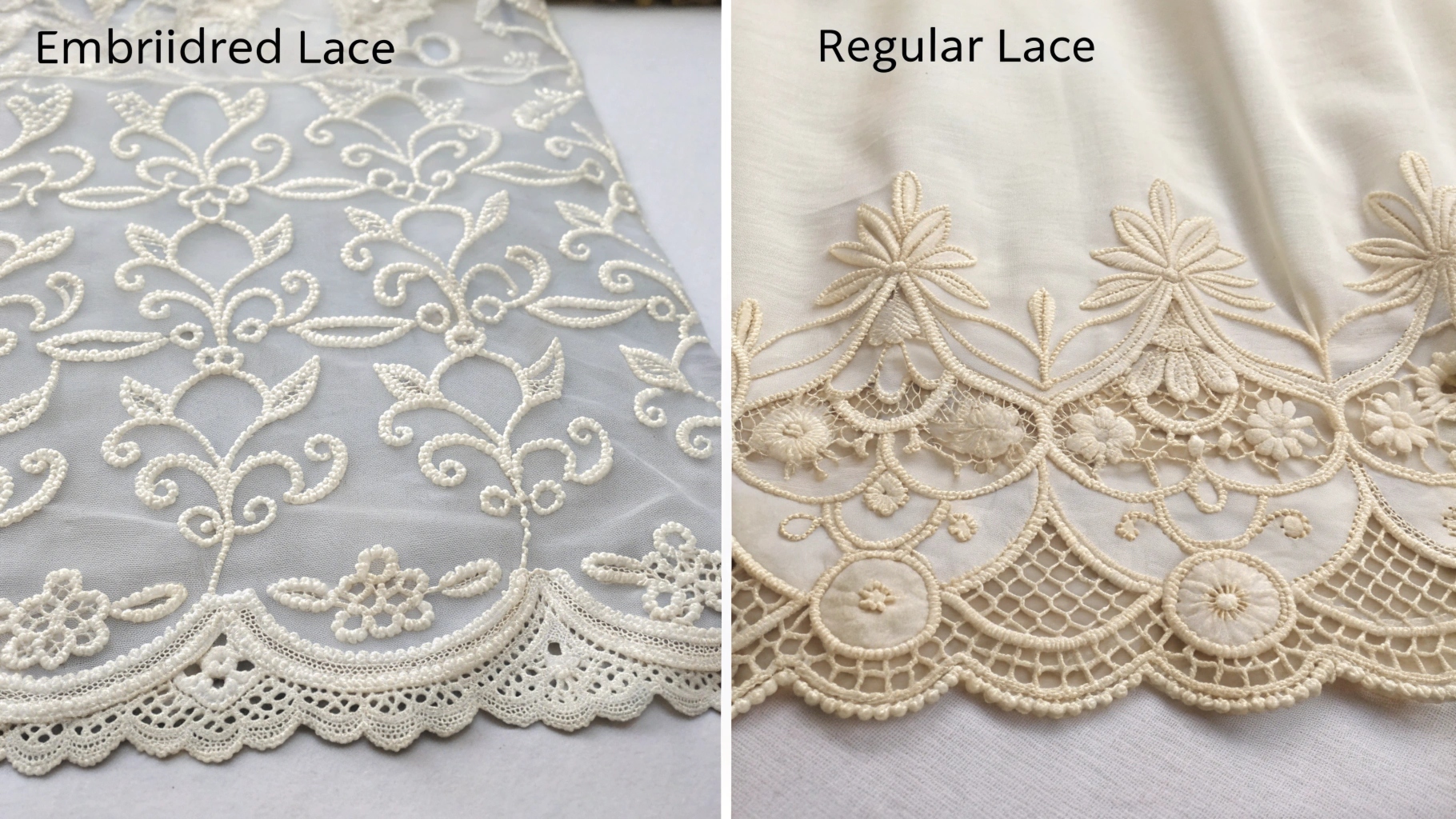
After twenty years of manufacturing at Marry Lace, I see this confusion daily. Fashion professionals need to understand these distinctions to make informed sourcing decisions for their collections.
How does lace construction differ from embroidery methods?
Traditional lace manufacturing confuses many wholesale buyers who expect a base fabric underneath the decorative elements.
True lace construction creates fabric through thread manipulation techniques like twisting, braiding, or knitting. The decorative pattern and structural foundation form simultaneously during production, resulting in a self-contained textile without separate base layers.
Traditional Lace Manufacturing Techniques
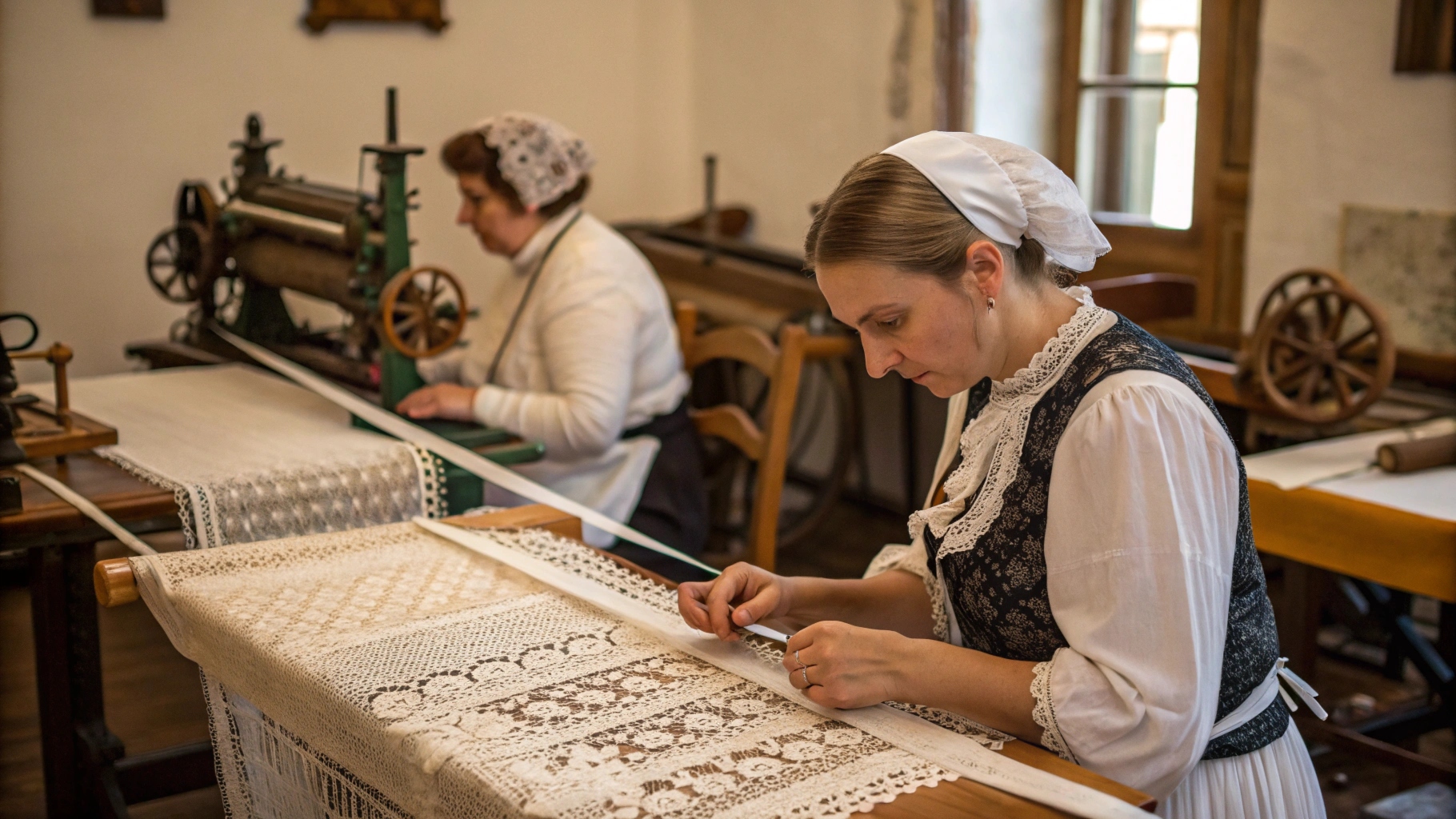
Our experience with wholesale lace fabric1 production reveals three primary construction methods. Bobbin lace uses weighted spools to twist threads around pins placed on pattern boards. Machine-made lace employs specialized equipment like Leavers or Raschel machines that manipulate multiple thread systems simultaneously.
Needle lace construction requires artisans to build patterns stitch by stitch using only needle and thread. Each technique produces distinct characteristics that affect the final garment’s behavior.
| Lace Type | Construction Method | Key Characteristics | Best Applications |
|---|---|---|---|
| Chantilly | Bobbin or Machine | Light, soft drape | Bridal overlays |
| Alençon | Needle technique | Dense, structured | Formal gowns |
| Raschel | Warp knitting | Stable, durable | Commercial applications |
The absence of base fabric means true lace offers exceptional breathability and lightweight properties. However, this construction limits the weight of embellishments the fabric can support.
Modern Embroidery Production Methods
Embroidered lace wholesale2 production starts with selecting appropriate base materials. Our facility uses high-grade tulle, mesh, or organza foundations that provide structural integrity for complex designs.
Computerized embroidery machines with multiple heads stitch decorative elements onto these foundations. This additive process allows unlimited design complexity because the base fabric carries the structural load.
Which fabric choice offers better design flexibility?
Designers often assume lace provides more creative freedom, but embroidery techniques actually offer superior versatility for modern fashion needs.
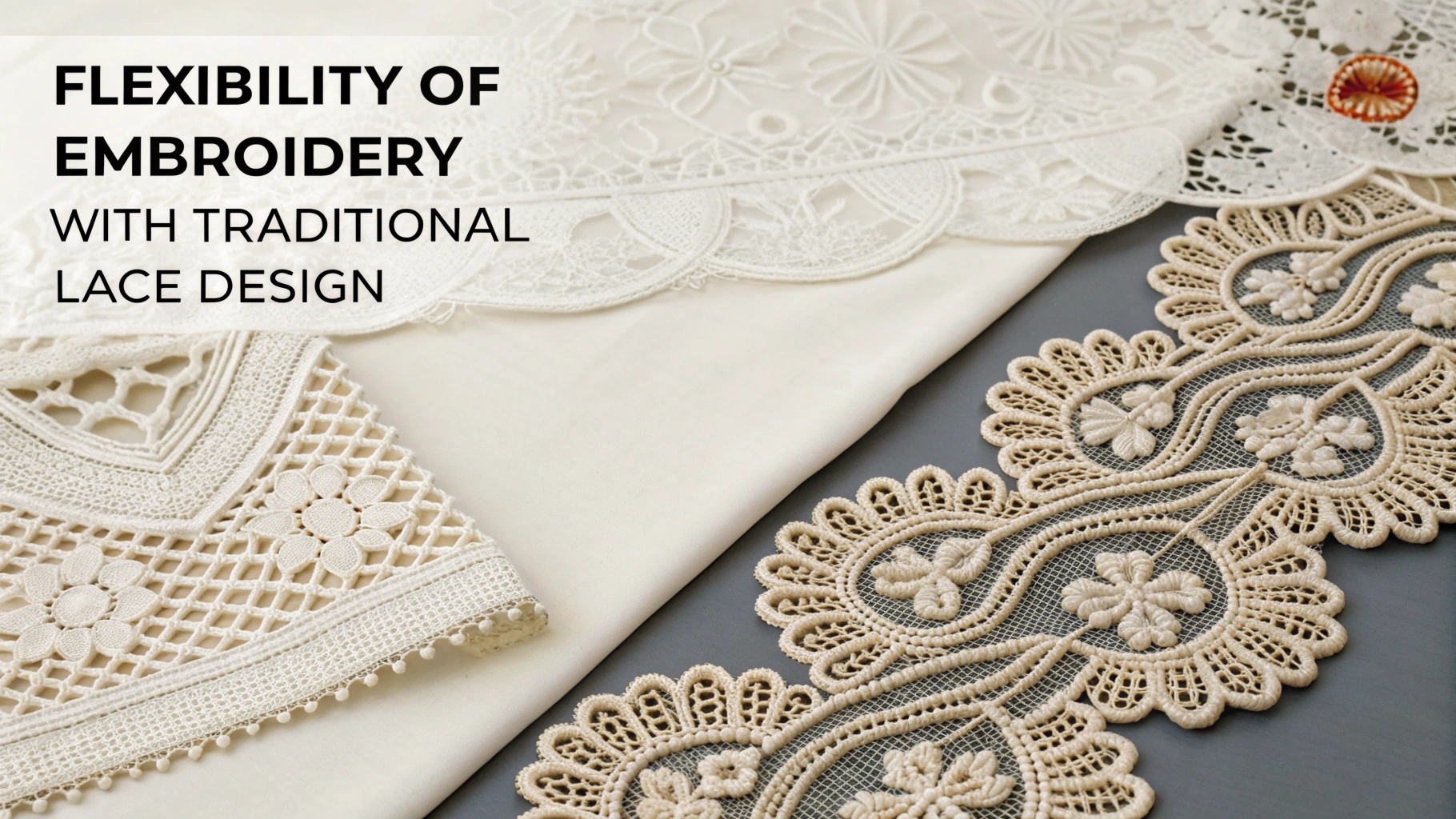
Embroidery provides greater design flexibility because decorative elements are added to stable base fabrics. This construction supports heavy beading, sequins, dimensional appliqués, and mixed media combinations that traditional lace structures cannot accommodate.
Weight Distribution Capabilities
Traditional lace construction limits embellishment weight because threads must support both structural integrity and decorative elements. Our manufacturing tests show that Chantilly lace begins distorting when bead weight exceeds 15 grams per square meter.
Beaded lace fabric wholesale production through embroidery techniques distributes weight across stable base materials. This approach enables designs with crystal densities reaching 150 grams per square meter without structural compromise.
Dimensional Design Possibilities
Embroidery construction supports three-dimensional elements that transform flat fabrics into sculptural textiles. Our3D floral embellishment3 techniques layer materials to create depth and texture impossible with traditional lace methods.
Color Integration Options
Wholesale embroidery lace allows multiple thread colors within single designs. Traditional lace production typically requires color changes between pattern sections, limiting gradient and shading effects.
Embroidery techniques enable thread color transitions within individual motifs, creating realistic floral representations and complex geometric patterns.
What manufacturing considerations affect your fabric selection?
Production requirements often determine whether embroidery or lace construction better serves specific design goals and business needs.
Manufacturing lead times, minimum order quantities, and customization capabilities vary significantly between lace and embroidery production. Embroidery offers faster sampling, lower MOQs for custom designs, and greater pattern modification flexibility during production runs.

Production Timeline Differences
Traditional lace manufacturing requires specialized machinery setup that extends lead times for custom patterns. Changing designs mid-production often means stopping entire production runs and reconfiguring equipment.
Our design process4 for embroidered textiles allows pattern adjustments through software modifications. Digital files enable rapid sampling and client approval cycles that accelerate project completion.
Quality Control Standards
Lace fabric manufacturer operations face different quality challenges than embroidery production. Lace defects often require complete section reweaving, while embroidery corrections can target specific areas without affecting surrounding fabric.
Embroidery quality control includes base fabric inspection, thread tension monitoring, and dimensional stability testing. Our multi-stage process ensures consistent results across large production runs.
Economic Considerations for Buyers
Minimum order quantities for traditional lace often exceed embroidery requirements because machine setup costs are higher. Textile wholesaler lace orders typically start at 1000 meters per design.
Embroidery production accommodates smaller quantities for specialized applications. Custom rhinestone applique bulk5 orders can begin at 200 pieces per design variation.
Technical Performance Characteristics
Fabric behavior under stress differs between construction methods. Traditional lace maintains dimensional stability through thread interdependence but offers limited stretch recovery.
Embroidered textiles inherit base fabric properties while adding surface decoration. Stretch mesh foundations provide garment fit flexibility that rigid lace construction cannot match.
Water resistance varies between techniques. Lace construction creates numerous small openings that affect moisture transmission. Embroidered fabrics offer better liquid barrier properties when base materials are appropriately selected.
Understanding these technical differences helps fashion professionals make informed sourcing decisions that align with design requirements and production constraints.
Conclusion
Choosing between embroidery and lace depends on your design goals, structural requirements, and manufacturing timeline needs.
-
Explore this link to discover top suppliers of wholesale lace fabric, ensuring quality and variety for your projects. ↩
-
Check this resource for reliable suppliers of embroidered lace, perfect for enhancing your designs with intricate details. ↩
-
Learn about the innovative techniques behind 3D floral embellishments that add depth and uniqueness to your fabric designs. ↩
-
Learn how a digital design process can streamline production and enhance client collaboration in textile manufacturing. ↩
-
Discover the advantages of bulk ordering rhinestone appliques, including cost savings and customization options. ↩