Skip to content
Lace fabric sourcing can quickly become overwhelming for fashion brands and bridal designers. With countless patterns, varying compositions (Nylon, Cotton, Rayon), and manufacturing techniques, selecting the wrong lace type can lead to production delays or cost overruns.
As a lace manufacturer, we often see designers struggle to balance the aesthetic of handmade French lace with the budget and scalability required for a commercial collection. I’ve seen confusion lead to costly mistakes in fabric selection.
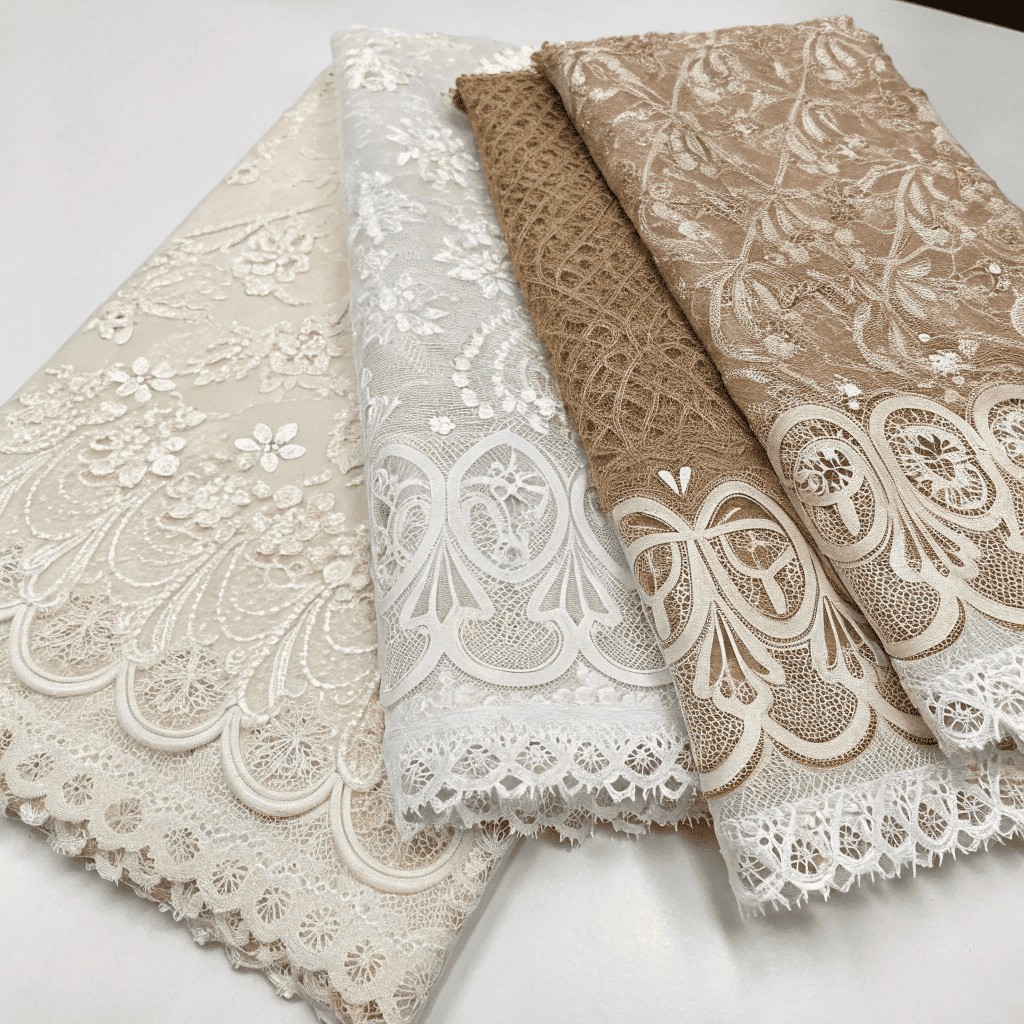
Lace fabric generally falls into three commercial categories: Raschel lace (machine-made, cost-effective), Embroidery lace (textured, heavy details on mesh), and Bobbin/Needle lace (handmade, high luxury). These types differ in production method, durability, and price point, with each serving different manufacturing needs.
When I first started at Marry Lace, understanding these distinctions was critical for calculating Cost of Goods Sold (COGS) and defining market positioning. Let’s explore the lace landscape from a professional sourcing perspective.
What Are The Three Types Of Laces?
To streamline your sourcing process, it helps to categorize lace by production method. This determines not just the look, but the price, lead time, and durability.
The three primary manufacturing categories are:
- Bobbin & Needle Lace (Handmade): The historical standard. Extremely expensive, labor-intensive, and primarily used for Haute Couture or museum pieces.
- Embroidery Lace (Machine): Patterns stitched onto a base (mesh/tulle). Allows for heavy beading, 3D effects, and is the modern standard for bridal gowns.
- Knitted/Woven Lace (Machine): Includes Raschel and Leavers. Created by twisting threads on large looms. Ideal for overlays, veils, and lingerie.
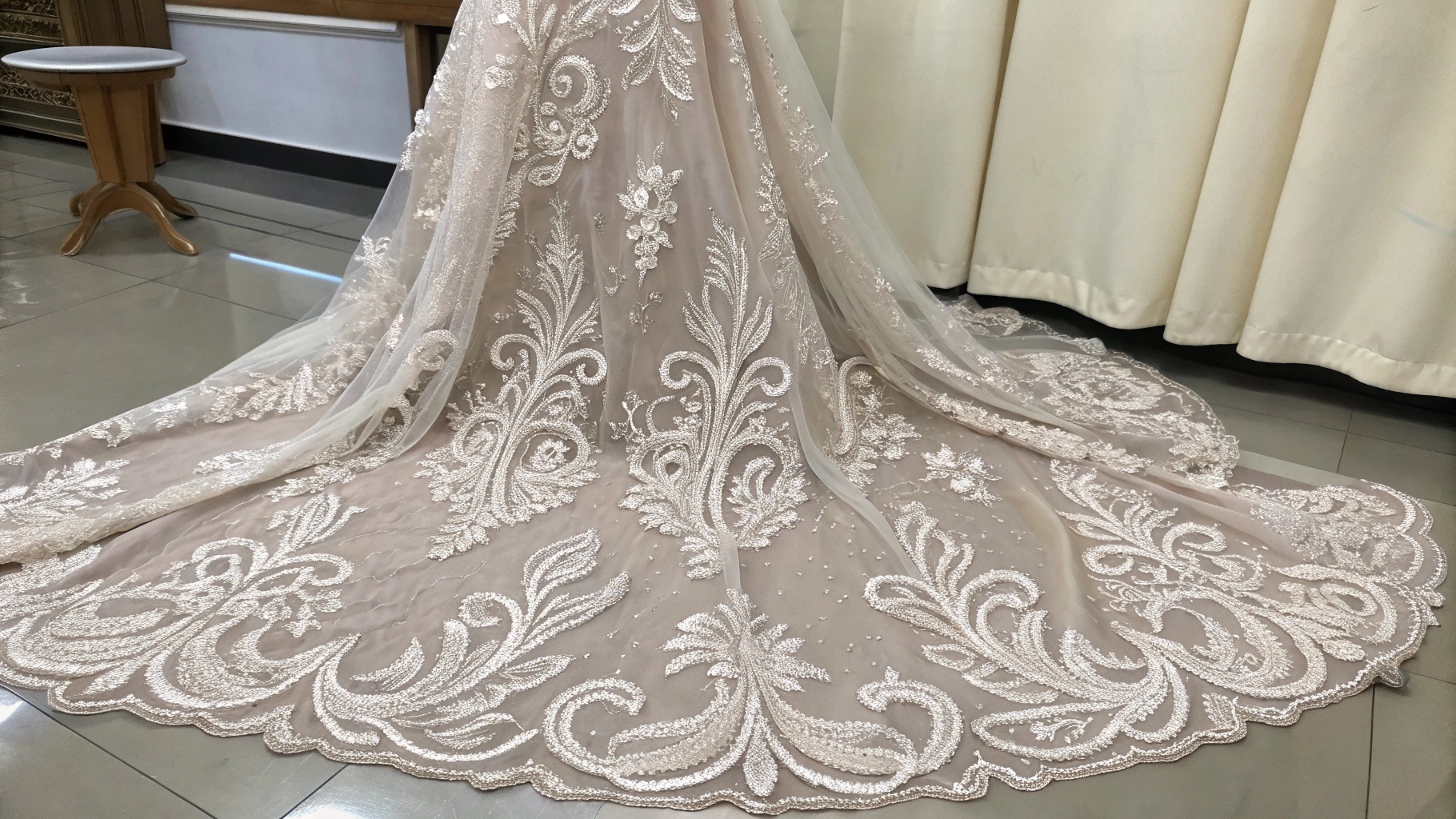
At Marry Lace, we specialize in bridging the gap. We utilize advanced multi-head embroidery machines and knitting technology to reproduce the complex aesthetics of historical lace at a scalable factory price.
Bobbin lace represents the old-world technique (dating back to the 16th century) involving multiple threads wound on bobbins. While beautiful, sourcing true handmade lace is rarely viable for Ready-to-Wear (RTW) collections due to lead times of 6+ months.
Needle lace offers incredible detail but is equally time-consuming. However, modern Machine Embroidery Lace has evolved to replicate these "needle" effects. By stitching motifs onto a tulle base, we can create:
- High Definition: Sharp floral outlines.
- Structure: Support for beads and sequins.
- Cutability: Motifs can be cut out and used as appliques without fraying—a crucial feature for your sewing team.
Machine-made lace (like Raschel) revolutionized the industry. These include several important sub-categories relevant to your production line:
| Machine Lace Type | Key Characteristics | Best Use Case |
|---|---|---|
| Raschel Lace | Flat, knitted, high durability | Lingerie, budget overlays, mass market |
| Embroidery Lace | Textured, stitched on mesh, can be beaded | Bridal gowns, evening wear, luxury appliques |
| Leavers/Chantilly | Fine details, delicate, eyelash edges | Veils, sleeves, high-end lingerie |
Looking for ready-to-ship options?
👉 [Browse Our Best-Selling Bridal Lace Collection]
What Is The Most Common Type Of Lace?
Many designers ask which lace varieties will be consistently available for production. Supply chain uncertainties can derail entire collections. Which type can you depend on?
Raschel lace is the most common type of lace globally due to its speed of production. However, for the Bridal and Evening Wear sectors, Embroidered Tulle Lace is the industry standard. It balances the "luxury look" of handmade lace with the consistency and scalability required for garment manufacturing.
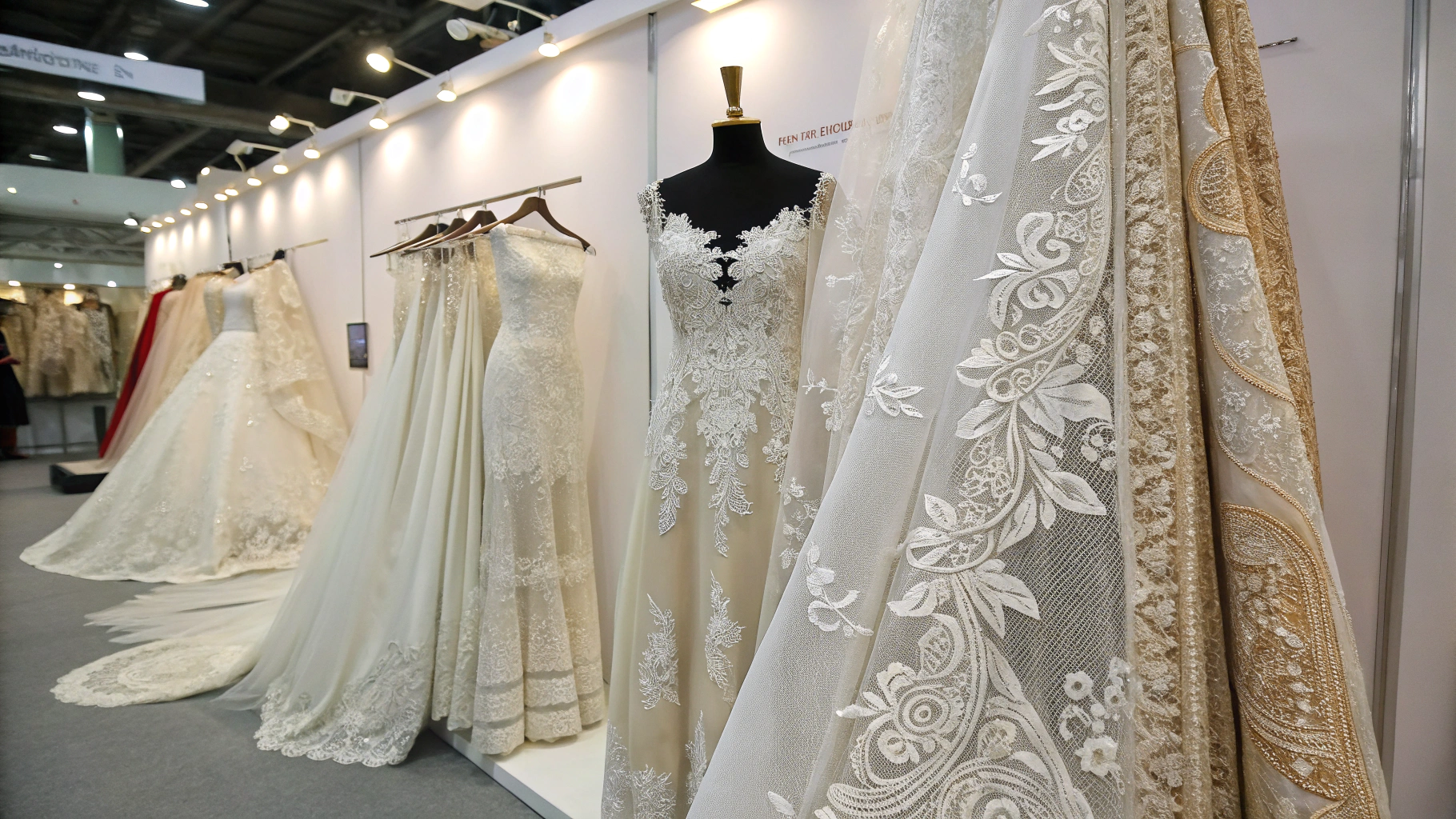
Raschel lace dominates the mass market (apparel, home décor) because it is knitted, durable, and cost-effective.
But at Marry Lace, our production focuses heavily on Embroidered and Beaded Lace. Why? Because modern brides demand texture.
- Design Flexibility: Modern machines can switch from delicate botanical motifs to bold geometric designs instantly.
- Versatility: It works for full gowns, veils, or can be cut into trims.
- Stability: Unlike some delicate knits, embroidered lace on a stable mesh base holds up well to the weight of a wedding dress train.
Sourcing Tip: If you are designing a budget-friendly line ($500-$1000 retail), choose Raschel. If you are targeting the luxury market ($1500+ retail), opt for Embroidered or Beaded Lace to justify the higher price point.
What Is The Most Expensive Type Of Lace?
When clients request "the best" lace, understanding price points is essential to avoid blowing your budget.
Authentic handmade Alençon or Brussels lace are the most expensive types, often costing hundreds or even thousands of dollars per yard. These are masterpieces requiring months of labor. However, for most commercial brands, the "Affordable Luxury" alternative is Re-embroidered (Corded) Lace.
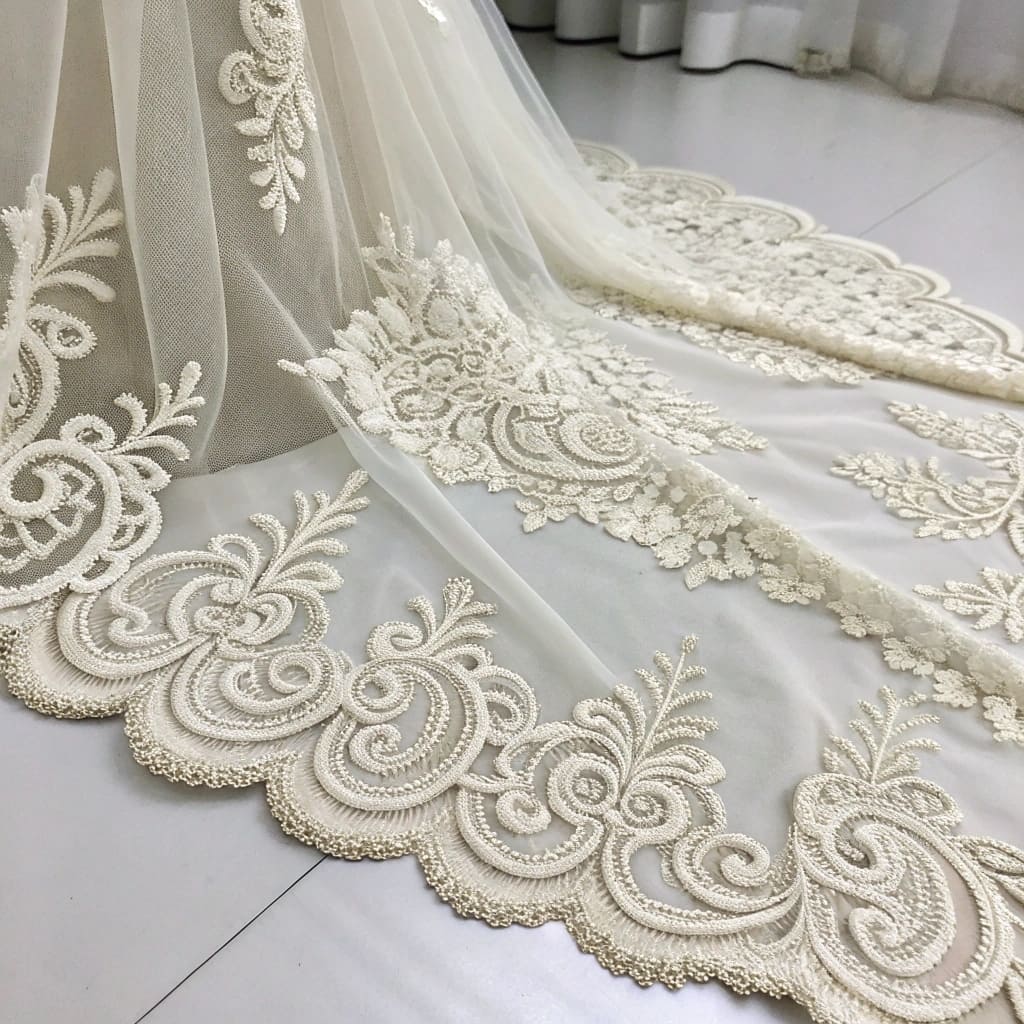
Unless you are a Heritage Couture House in Paris, using $500/yard handmade lace is unsustainable.
The Marry Lace Solution:
We produce "Alençon Style" Corded Lace. We use a technique called "cordonnet" (a heavier thread) to outline the floral patterns on the machine-made lace.
- Visual Impact: Mimics the raised texture and definition of handmade Alençon.
- Cost: A fraction of the handmade price, suitable for wholesale.
- Availability: Low MOQ and fast restocking from our factory.
This allows designers to offer the look and feel of high couture without the prohibitive costs.
What Is The Difference Between Chantilly Lace And Regular Lace?
This is a frequent question from sourcing managers. Is Chantilly worth the specific search?
Chantilly lace differs from regular lace through its fineness and specific aesthetic. Authentic-style Chantilly features a very fine hexagonal mesh ground, detailed floral patterns, and often delicate "eyelash" edges. Regular lace tends to be coarser, stiffer, and lacks the soft drape that makes Chantilly ideal for veils and sleeves.
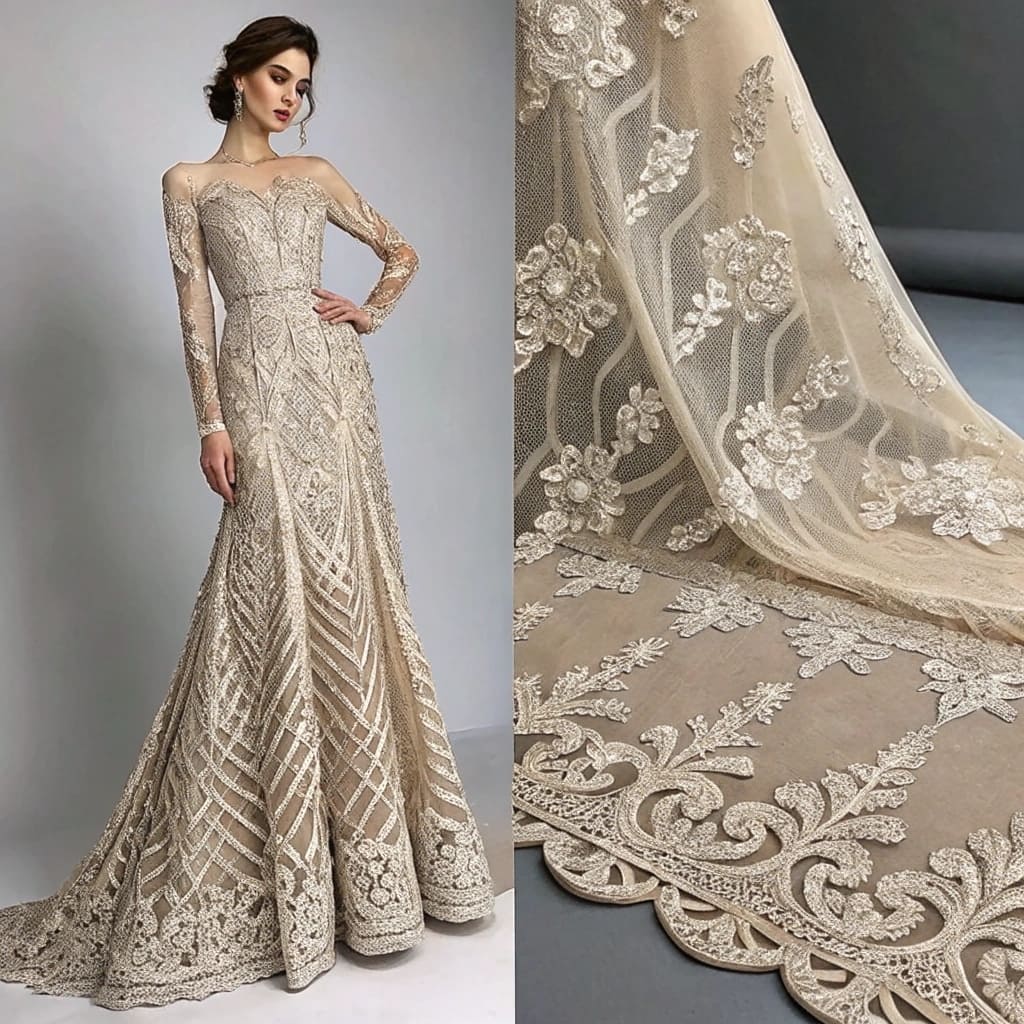
At Marry Lace, we manufacture French-Style Chantilly Lace using specialized nylon/rayon blends to ensure the fabric is soft against the skin—crucial for unlined bodices or sleeves.
Here is the breakdown for your technical pack:
- Ground Structure: Chantilly has a sheer, "floating" background. Regular lace often has a thicker, more visible net.
- Outline Technique: Chantilly patterns are flat and shadow-like. Regular (or Corded) lace has raised textures.
- Edge Treatment: Look for the Eyelash Edge. This scalloped, fringed edge is a hallmark of quality Chantilly and saves you from hemming the fabric, adding a premium finish to your garment.
| Feature | Marry Lace Chantilly Style | Standard Polyester Lace |
|---|---|---|
| Touch | Silky, Soft, Non-scratchy | Stiff, potentially plastic-feel |
| Drape | Fluid, hugs the body | Rigid, stands away from body |
| Application | Veils, Sleeves, Overlays | Tablecloths, Costumes, Structured parts |
Conclusion: Sourcing the Right Lace for Your Brand
Lace fabrics come in remarkable variety. Identifying the lace is step one; sourcing it reliably is step two.
When vetting suppliers for your next collection, ask:
- Is the design original? (We protect our clients with original copyrighted patterns).
- Can you Dye-to-Match (DTM)? (Color consistency is key for linings).
- Is it in stock? (We maintain ready-to-ship stock for popular styles).
Ready to start your next collection? Don’t let supply chain issues compromise your design vision.
👉 [Contact Our Team for a Wholesale Quote] or [View Our Lace Catalog]