Skip to content
Are you struggling to find innovative lace trim styles that will set your bridal collection apart? With fast-changing trends and client demands, selecting the right trim can make or break your designs.
The five essential lace trim styles for future include vintage Chantilly with scalloped edges, geometric laser-cut patterns, 3D floral appliqués with metallic threading, sustainable eco-trims, and asymmetrical fringe designs—each offering unique texture and appeal for modern luxury bridal wear.
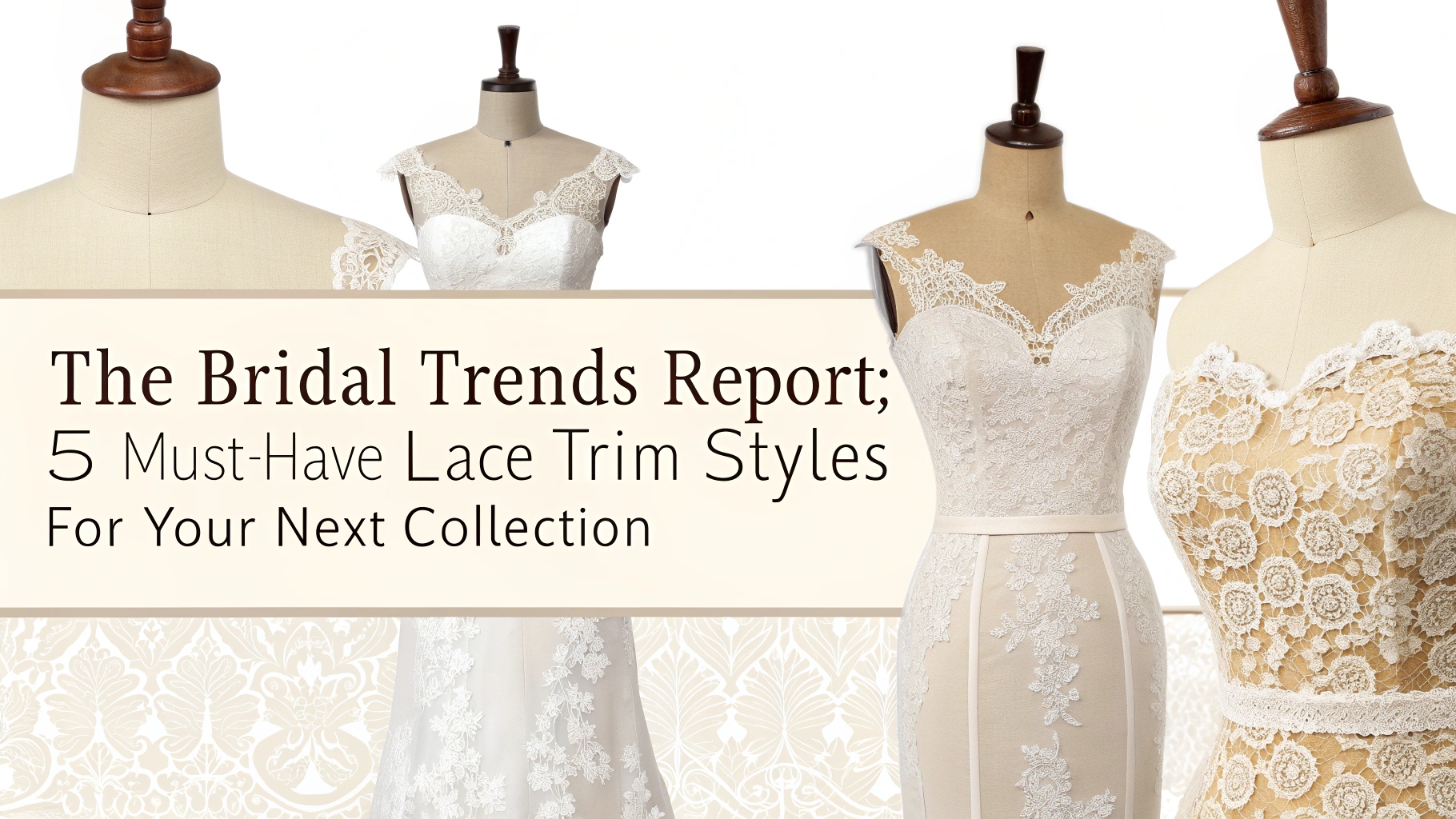
After two decades leading Marry Lace’s design and manufacturing efforts across our facilities in Hunan, China, and Turkey, I’ve watched bridal trends shift dramatically. The lace trims that succeed are those that balance innovation with craftsmanship. Right now, we’re seeing designers demand styles that solve real challenges—timeless elegance, production efficiency, and ethical sourcing. Let me share the five trim styles that will define your next collection.
- 1 Why Are Vintage-Inspired Chantilly Trims with Scalloped Edges Making a Comeback?
- 2 How Do Geometric Laser-Cut Trims Serve Contemporary Minimalism?
- 3 What Sets 3D Floral Appliqué Trims with Metallic Threading Apart?
- 4 Why Are Sustainable Eco-Trims Essential for Today’s Market?
- 5 How Do Asymmetrical Fringe Trims Add Movement to Bohemian Designs?
- 6 Conclusion
Why Are Vintage-Inspired Chantilly Trims with Scalloped Edges Making a Comeback?
The bridal market is craving romance with authenticity. Designers tell me their clients want heirloom quality without sacrificing modern silhouettes. This is where vintage Chantilly trims shine.
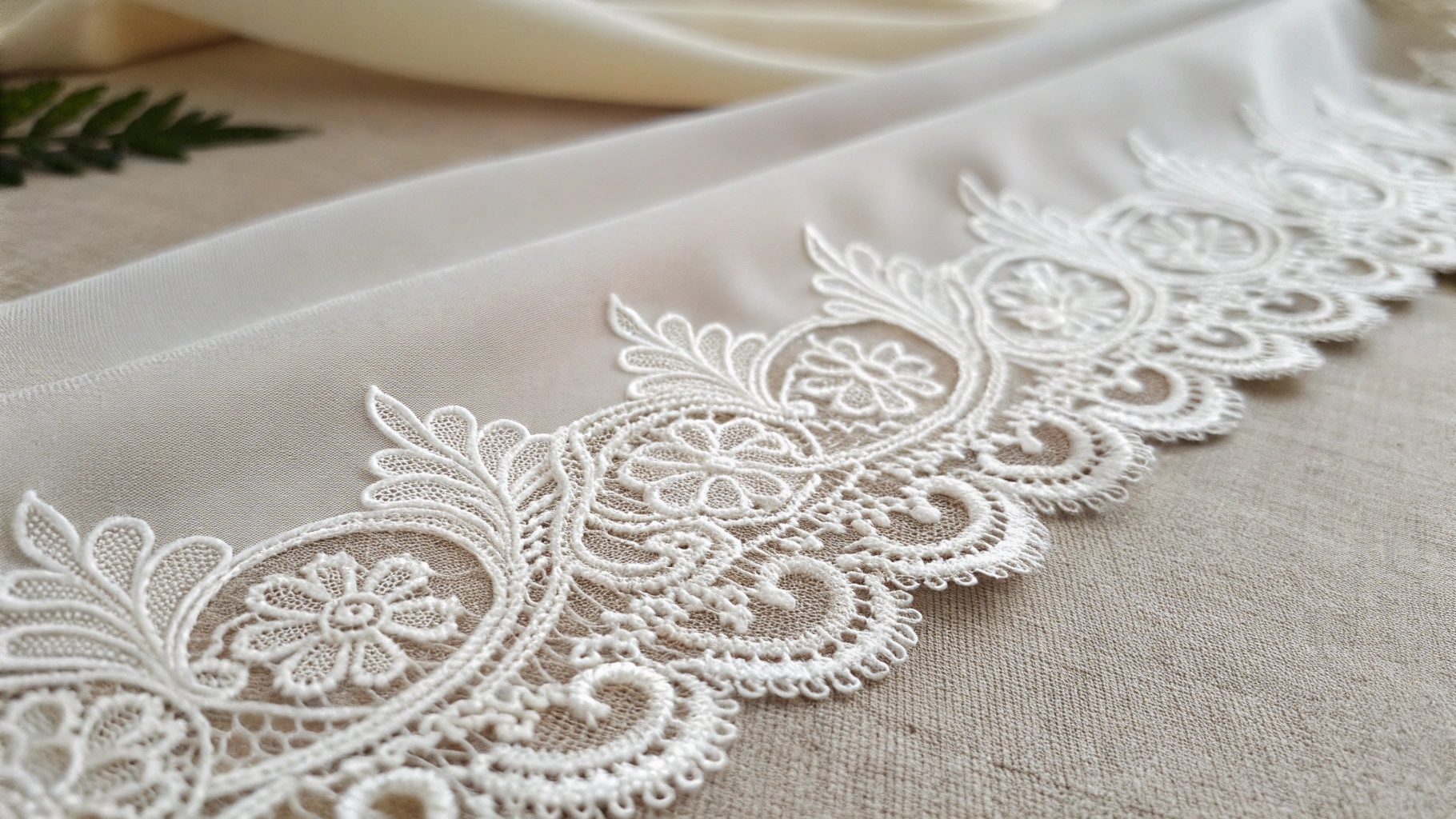
Chantilly trims with delicate scalloped edges offer ethereal, timeless details that enhance gowns without overwhelming them. These trims work perfectly on necklines, sleeves, and hemlines, blending seamlessly with contemporary designs while adding depth.
What Makes Chantilly Trims So Versatile?
Chantilly lace originated in France. Its fine netting and floral patterns create an airy feel. When we produce Chantilly lace at Marry Lace, we focus on the scalloped edge finishing. This edge gives structure without rigidity.
I recommend pairing these trims with minimalist fabrics like silk crepe or satin. The contrast makes the lace pop. For example, a simple A-line gown gains dimension with Chantilly trim along the neckline and train. The scalloped detail catches light beautifully during ceremonies.
Our clients in Italy, like boutique designers focusing on bespoke bridal, appreciate the flexibility here. These trims work on veils, cathedral trains, and even as overlay accents. We offer them in ivory, champagne, and soft blush tones—all with uniform dye lot control across batches. This consistency matters when you’re creating multiple pieces for one collection.
One key advantage? Chantilly trims are lightweight. They don’t add bulk. Brides wearing them all day stay comfortable. From a manufacturing perspective, we produce these trims with both traditional and modern embroidery machines. This allows us to maintain authentic patterns while scaling production for bulk lace fabric orders.
How Do Geometric Laser-Cut Trims Serve Contemporary Minimalism?
Modern brides want clean lines. They seek subtle texture without traditional florals. Geometric laser-cut trims answer this demand perfectly.
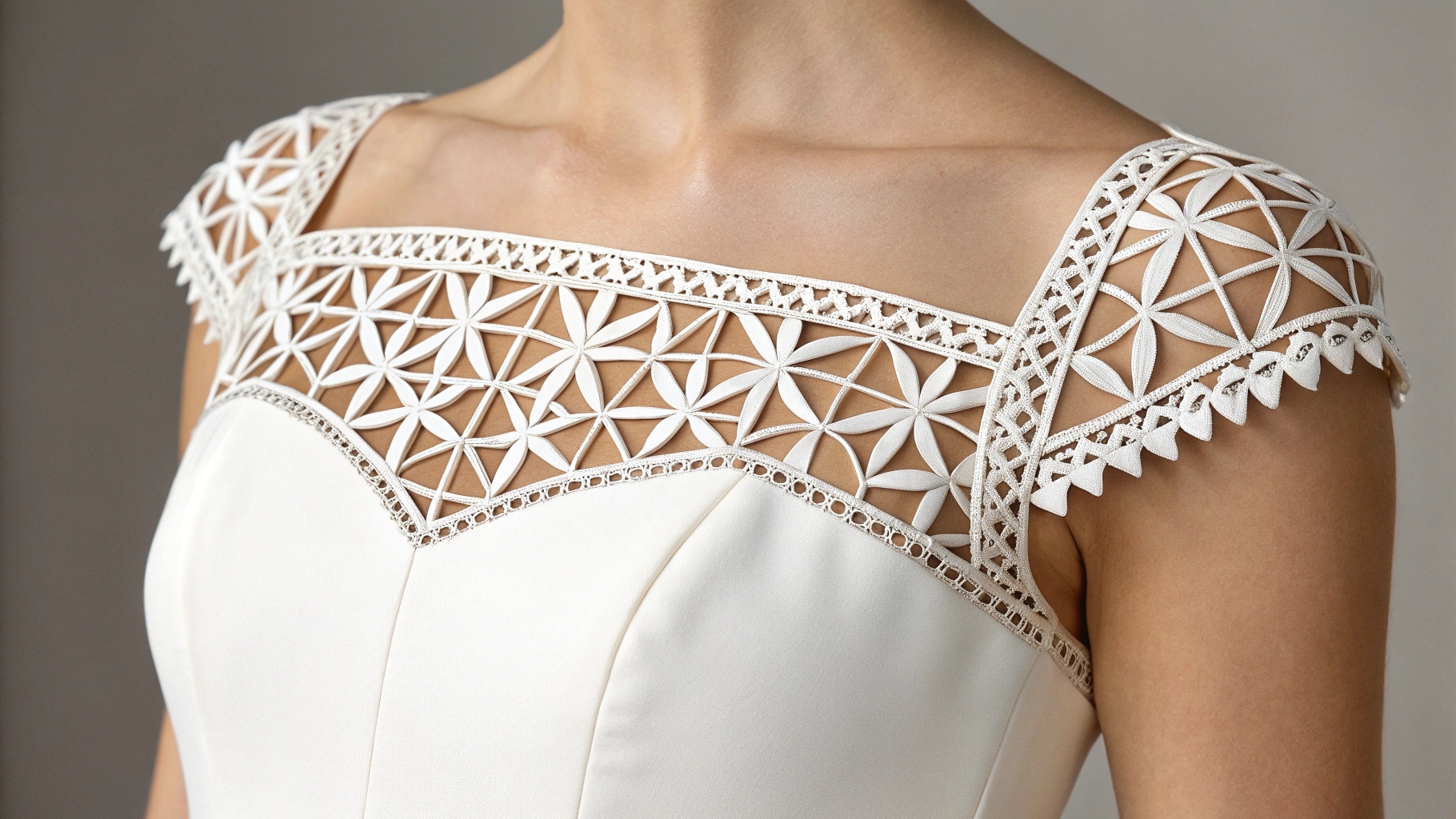
Geometric laser-cut trims provide precision patterns with sharp edges and minimal embellishment. These trims suit contemporary minimalist designs, offering sophisticated texture for brides who prefer modern aesthetics over traditional romance.
Why Precision Matters in Laser-Cut Trims
We developed proprietary laser-cut patterns at our design process center. The technology allows repeatable precision that hand-cutting can’t match. Each trim has identical spacing and pattern integrity across entire rolls.
I’ve noticed designers use these trims on illusion necklines and sleeves. The geometric shapes create visual interest without adding volume. Think hexagons, Art Deco lines, or angular florals. These patterns work especially well with structured fabrics like mikado or duchess satin.
Our laser-cut trims1 are popular among designers creating capsule collections. They want signature looks without excessive ornamentation. A simple sheath dress becomes memorable with strategic geometric trim placement along shoulders or waistlines.
From a production standpoint, laser cutting reduces waste. We can nest patterns efficiently during manufacturing. This also lowers costs for clients working with tighter budgets. When you source wholesale lace trim in bulk, these efficiencies translate to better pricing.
One challenge we solved? Durability. Early laser-cut trims1 sometimes frayed. We reinforced edges with micro-bonding techniques during production. Now these trims withstand multiple fittings and alterations without degrading. This reliability matters for designers like you who need consistent quality.
What Sets 3D Floral Appliqué Trims with Metallic Threading Apart?
Statement pieces drive bridal sales. Brides remember gowns with dimensional details. 3D floral appliqué trims deliver that memorable impact.
3D floral appliqué trims feature raised motifs enhanced with metallic threading, creating depth and sparkle. These trims transform veils, bodices, and trains into statement pieces with tactile texture that photographs beautifully.

How We Achieve Dimension in Appliqué Trims
Our 3D floral embellishment collection uses layered embroidery techniques. We build petals with multiple passes of thread. Each layer adds height. Then we integrate metallic threads—silver, gold, or rose gold—for light reflection.
I recommend using these trims sparingly. Too much dimension overwhelms the eye. A strategic placement on the bodice or trailing down the back creates focal points. Photographers love these trims because they add texture in close-up shots.
The metallic threading serves a dual purpose. It catches light during movement and adds subtle color variation. We offer different metallic finishes—brushed for matte effects or polished for high shine. This customization helps you match your overall collection aesthetic.
When working with rhinestone appliques, combining them with 3D floral trims creates luxurious layering. We’ve seen designers apply rhinestone centers to our 3D flowers for extra sparkle. This combination works exceptionally well for reception dresses where movement and photography are priorities.
One technical consideration? Weight distribution. Heavy appliqué trims need proper support. We design our 3D trims with reinforced backing so they don’t sag or distort fabric over time. For tulle or organza applications, we reduce the backing weight while maintaining structural integrity. This attention to detail ensures your finished gowns maintain their shape through multiple wearings.
Why Are Sustainable Eco-Trims Essential for Today’s Market?
Ethical sourcing isn’t optional anymore. Clients demand transparency about materials and production methods. Sustainable eco-trims meet these requirements while maintaining luxury quality.
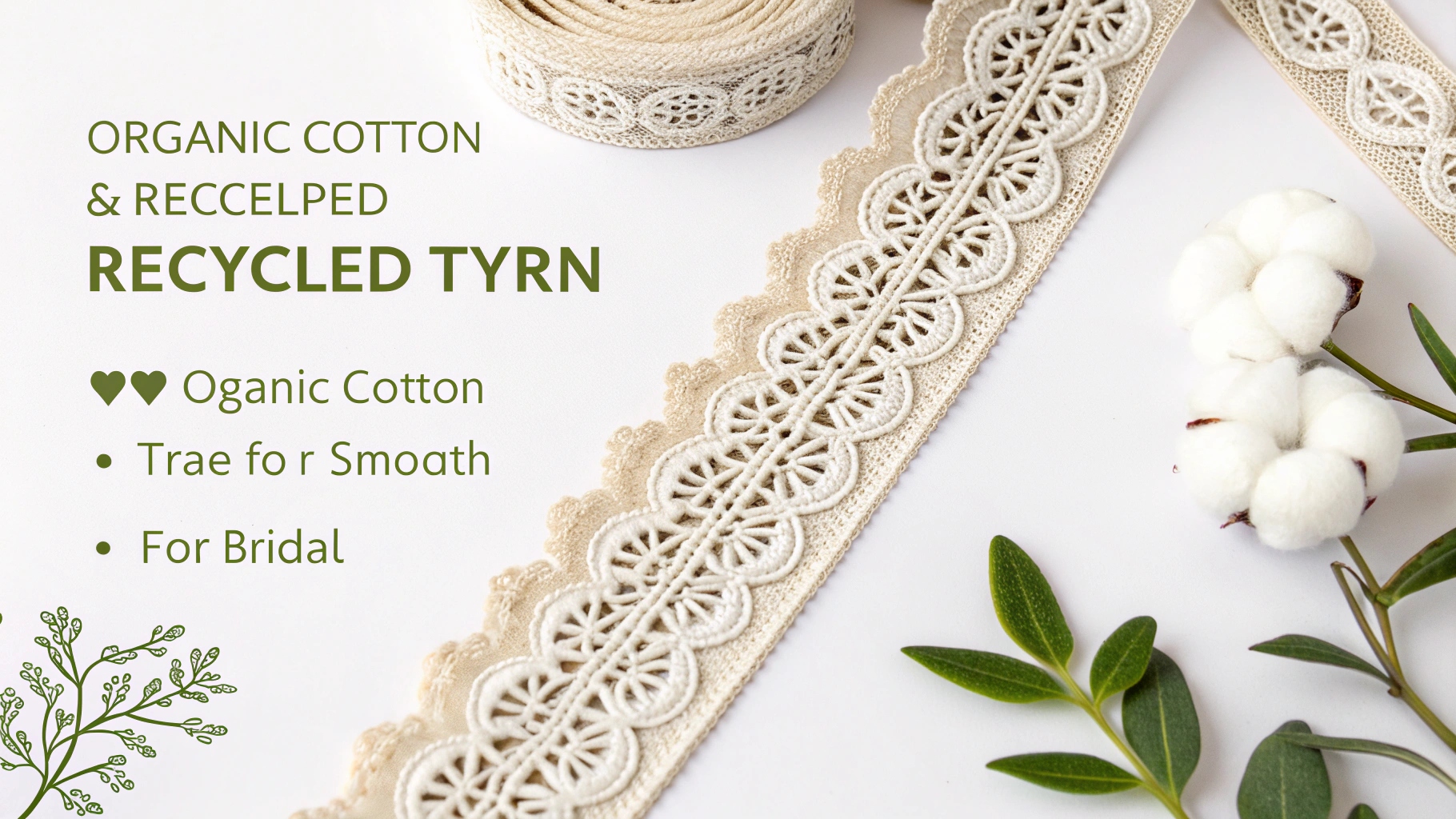
Sustainable eco-trims use recycled yarns and organic cottons, offering environmentally responsible options without compromising quality. These trims appeal to conscious consumers and designers prioritizing ethical production with consistent dye lots and certifications.
What Goes Into Producing Eco-Trims?
At Marry Lace, we’ve integrated sustainable practices across our manufacturing. Our eco-trims2 start with certified organic cotton or recycled polyester yarns. These materials reduce environmental impact without sacrificing the hand-feel that luxury bridal requires.
I work closely with suppliers who provide traceable raw materials. This traceability matters when clients like boutique owners in Italy ask for sustainability documentation. We can verify every step from fiber to finished trim.
One breakthrough we achieved? Dye lot consistency using eco-friendly dyes. Traditional concerns about organic materials producing uneven colors are outdated. Our quality control processes ensure uniform color across batches. This reliability solves a major pain point for designers who need matching trims across multiple gown orders.
Recycled yarns offer surprising versatility. We produce elegant trims that rival conventional materials in appearance and durability. The recycled content comes from post-consumer textiles, diverting waste from landfills. This circular approach resonates with environmentally conscious brands building their marketing stories.
Our custom color development extends to eco-trims2. We can match your specific palette using approved sustainable dyes. The process takes slightly longer than conventional dyeing, but the environmental benefits and market appeal justify the timeline.
From a business perspective, eco-trims2 are an investment in brand positioning. Designers who adopt sustainable materials3 early gain competitive advantages. Their marketing emphasizes ethical choices, attracting clients willing to pay premium prices for responsible luxury. We see this trend accelerating globally across European and North American markets.
How Do Asymmetrical Fringe Trims Add Movement to Bohemian Designs?
Destination weddings and bohemian styles continue growing. Brides want movement and playfulness. Asymmetrical fringe trims deliver both with sophisticated flair.
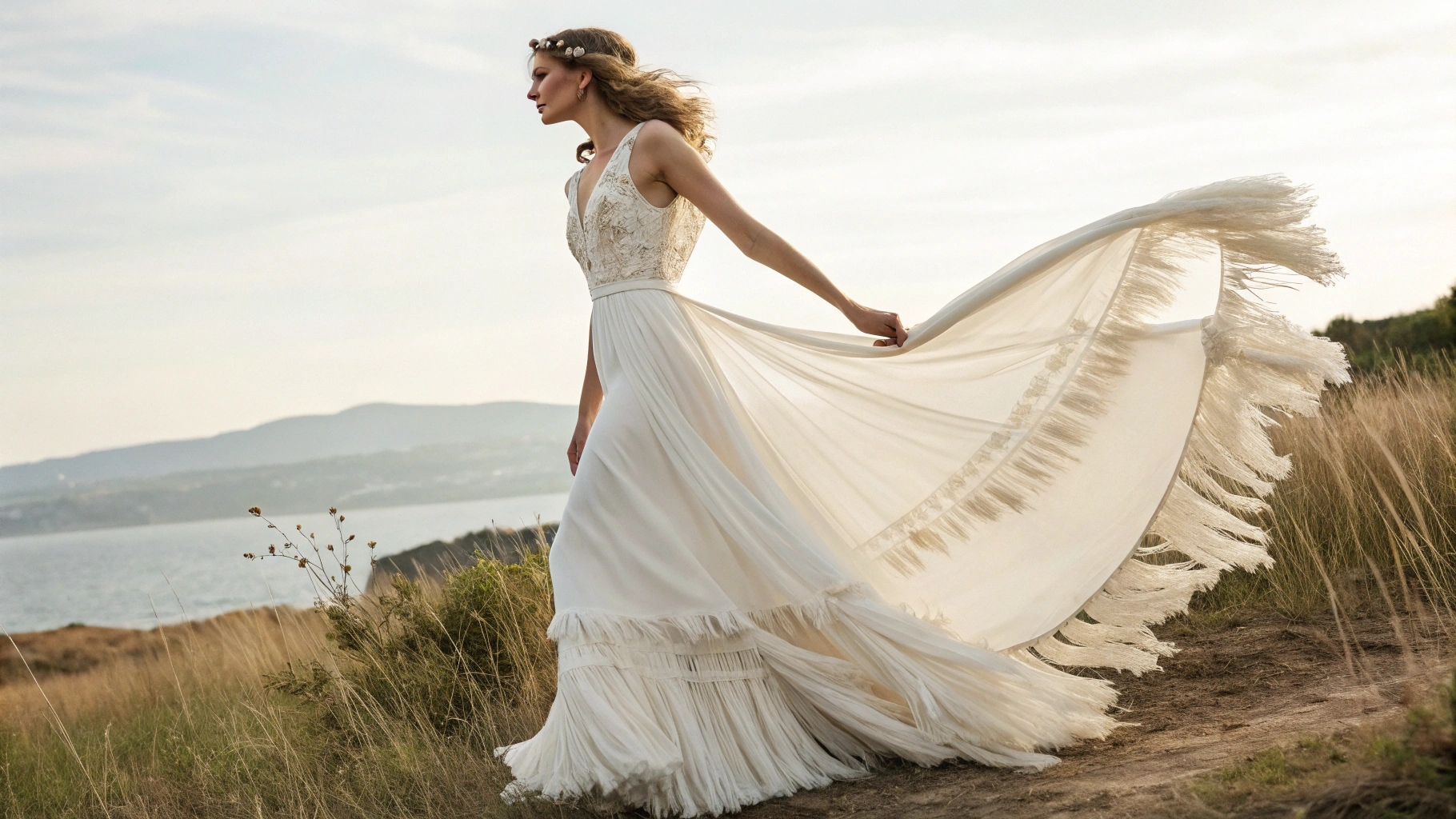
Asymmetrical fringe trims bring dynamic movement and texture to gowns through varying lengths and strategic placement. These trims work beautifully for bohemian, destination, and unconventional bridal styles where fluid motion enhances the overall design.
Why Asymmetry Works in Bridal Design
Traditional bridal design emphasizes symmetry. But modern brides embrace unexpected elements. Asymmetrical fringe trims break conventional rules while maintaining elegance.
We produce these trims with graduated lengths. Shorter fringe sections transition to longer ones, creating visual flow. When a bride moves, the fringe sways at different rates. This layered movement photographs beautifully and adds dimension in videos.
I recommend placing asymmetrical fringe along hemlines or sleeve edges. A-line and fit-and-flare silhouettes particularly benefit from this trim style. The fringe emphasizes movement during walking or dancing. For beach weddings, lightweight fringe catches ocean breezes, creating ethereal effects.
Our beaded lace collection pairs well with fringe trims. We combine small beads at fringe tops with flowing unadorned lengths below. This creates weight distribution that helps fringe hang properly while adding sparkle near the body.
One production insight? Fringe length affects manufacturing complexity. Longer fringe requires careful handling during cutting and packaging. We developed specialized techniques to prevent tangling during shipping. When you order wholesale lace fabric including fringe trims, we roll them on cores that maintain fringe integrity.
Asymmetrical fringe also works on accessories. We’ve seen designers apply these trims to veils, creating cascading effects. Bridal capes with fringe edges are trending for reception wear. The versatility makes this trim style a smart investment for diverse collections. You can use the same trim across multiple garment types, simplifying inventory management while offering varied looks.
Conclusion
These five lace trim styles define 2025 bridal trends. From vintage Chantilly to sustainable eco-trims, each offers distinct advantages for your luxury bridal collection. We’re ready to help you create exceptional designs—contact us today.
-
Explore this link to understand how laser-cut trims enhance design precision and efficiency, making them a game-changer for fashion. ↩ ↩
-
Explore this link to understand how eco-trims can enhance your brand’s sustainability and appeal to eco-conscious consumers. ↩ ↩ ↩
-
Discover the advantages of sustainable materials in fashion, including environmental impact and market trends, to stay ahead in the industry. ↩